
Ships work programme
Our programme
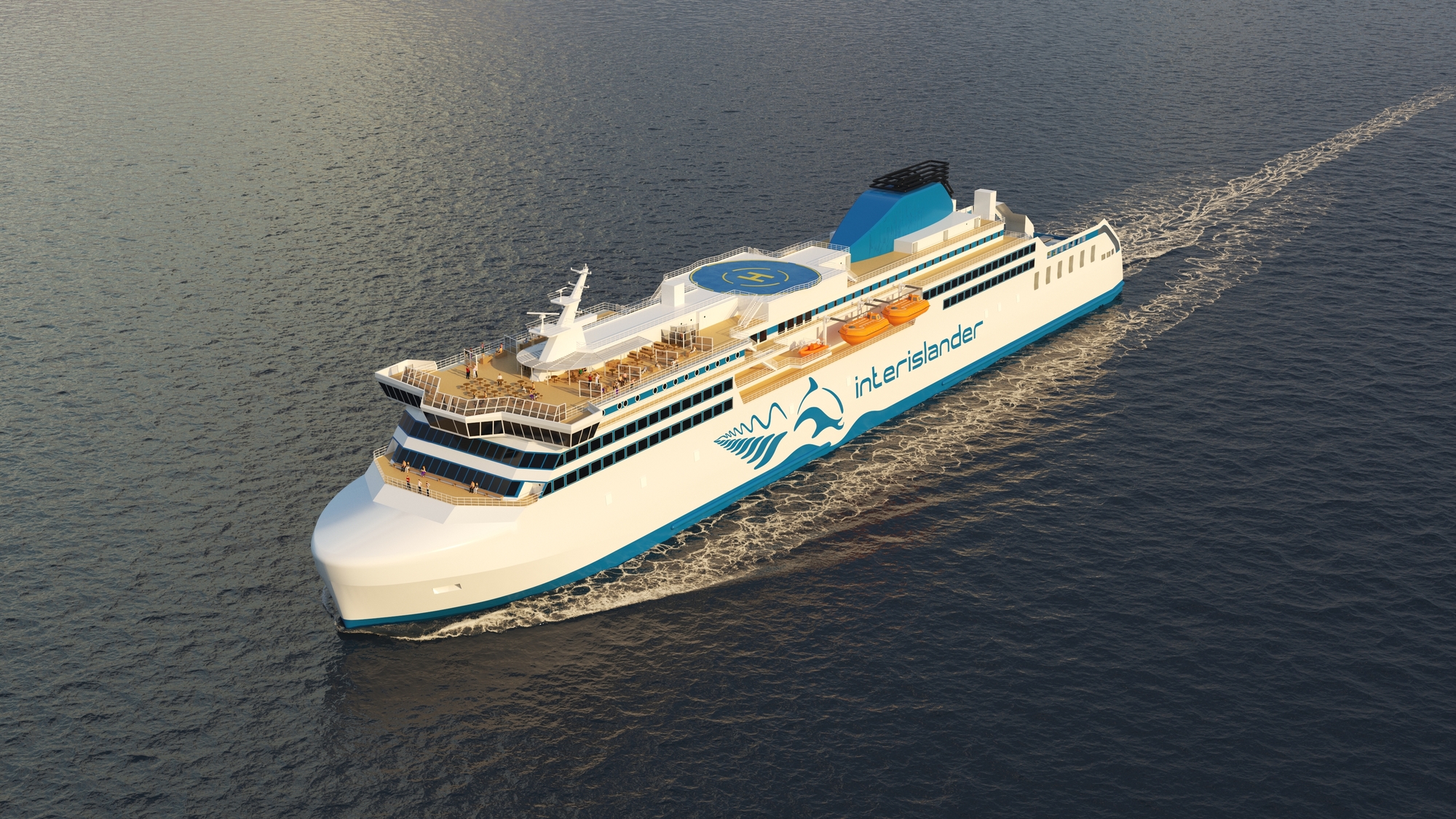
The Ships’ work programme is undertaking a commercially robust procurement process for the design, build and delivery of two new ships.
The new ferries will safely transport passengers, cars, trucks, and rail wagons across the Cook Strait.
The new ferries will work to minimise carbon emissions and will have an expected life of 30 years.
Note this is indicative only. Details of the ferries may change as final design and build processes are completed.
Why the new Cook Strait ferries are important
Designed for New Zealand
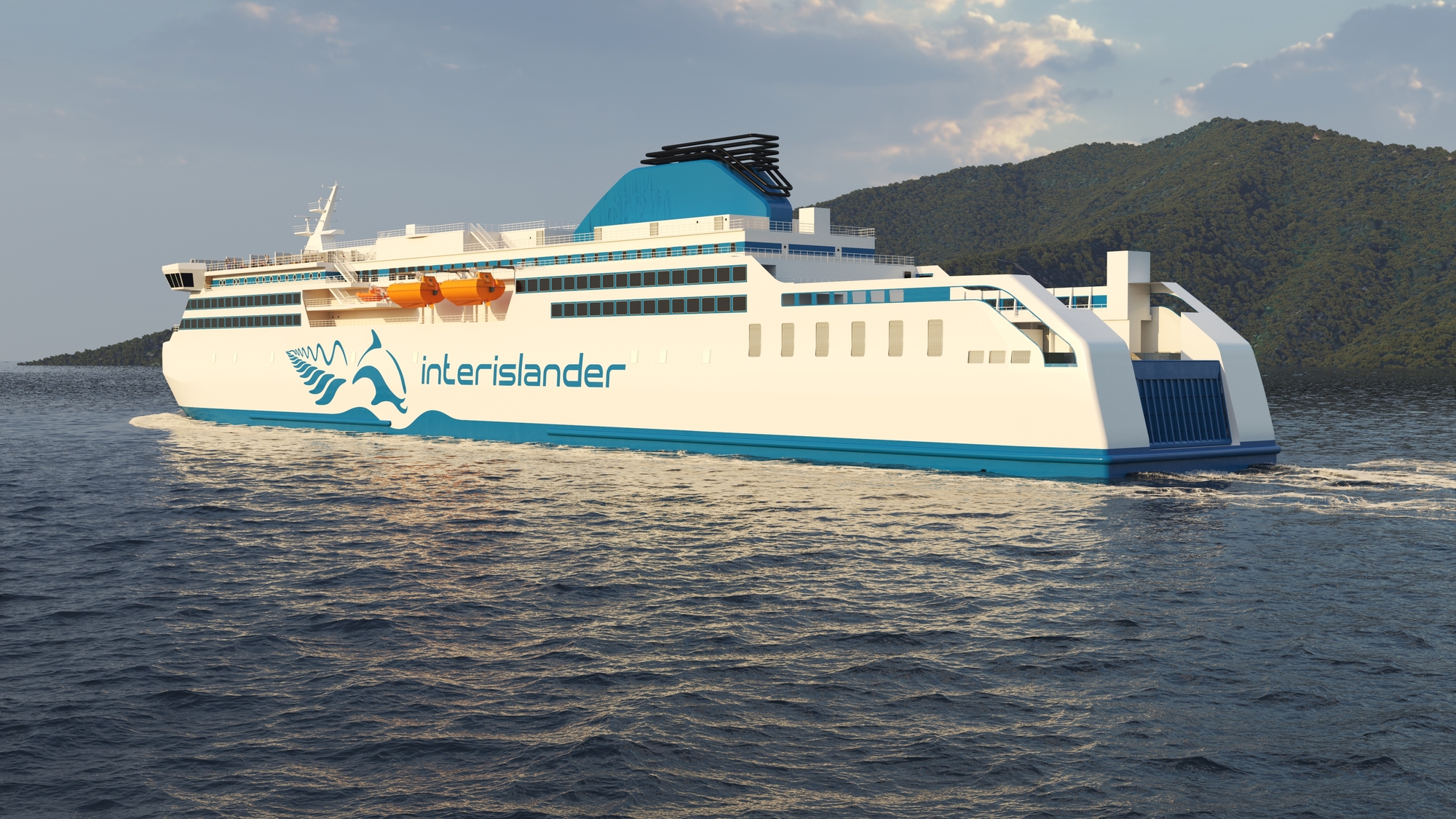
The new ferries are specially designed for the Cook Strait and Marlborough Sounds, taking into account local weather, sea conditions, and the needs of Kiwis travelling between the North and South Islands.
Fit for purpose
These ferries are built to match the unique demands of their route, including sailing schedules, the needs of passengers, freight customers, required redundancy and maintenance requirements over their lifetime.
Smart use of space
The layout inside the ferries is flexible.
For example, some areas can be closed off when not needed, which saves energy and provides an efficient service delivery.
Ready before building starts
All the important details about how the ferries need to perform on the Cook Strait are decided before building begins, so the finished ships are ready to do the job from day one.
Key design drivers
Balanced customised design for New Zealand: prioritising safety, compliance and future ready performance
The design balances upfront investment, operating costs, and environmental impact.
It is customised for New Zealand, prioritising safety, compliance, passenger experience, and strong commercial and operational performance to meet transport needs now and in the future. The new ferries are designed to minimise lifetime ownership costs.
Efficient propulsion and rapid port turnaround
The vessels feature an advanced, fuel-efficient and future proofed power and propulsion system with integrated redundancy to ensure operational reliability.
Flexible cargo deck layout enables efficient port operations and fuel savings
The cargo decks are designed to facilitate rapid turnaround at port, which supports reduced fuel consumption by allowing for slower transit speeds across the Cook Strait.
Delivering strong connections
Guangzhou Shipyard International (GSI)
Guangzhou Shipyard International (GSI) is a leading shipbuilder with a strong international reputation for quality and innovation.
Key strengths include:
Extensive experience
GSI has delivered quality Ro-Pax vessels for major European ferry operators and government clients, with seven new ships scheduled through 2029.
Comprehensive in-house capabilities
All stages of shipbuilding are managed in-house, supported by a dedicated team of over 1,500 engineers with flexibility to work with external designers as needed.
Advanced design, engineering and production facilities
GSI offers advanced steel production, laser cutting, large dry docks for multiple ferries, and extensive fit-out quays. Their facilities enable efficient, high-quality production, with most major construction completed on-site.
Structured project management
GSI uses structured project management and clear procurement planning to ensure timely delivery.
Quality, compliance, and innovation
Accredited for quality, occupational health and safety, and environmental management, GSI upholds strict standards for subcontractors.
Crew training and aftercare
GSI provides comprehensive pre-delivery crew training and onboard maintenance support during the warranty period for technical assistance.
Ferry specifications
Deck layouts
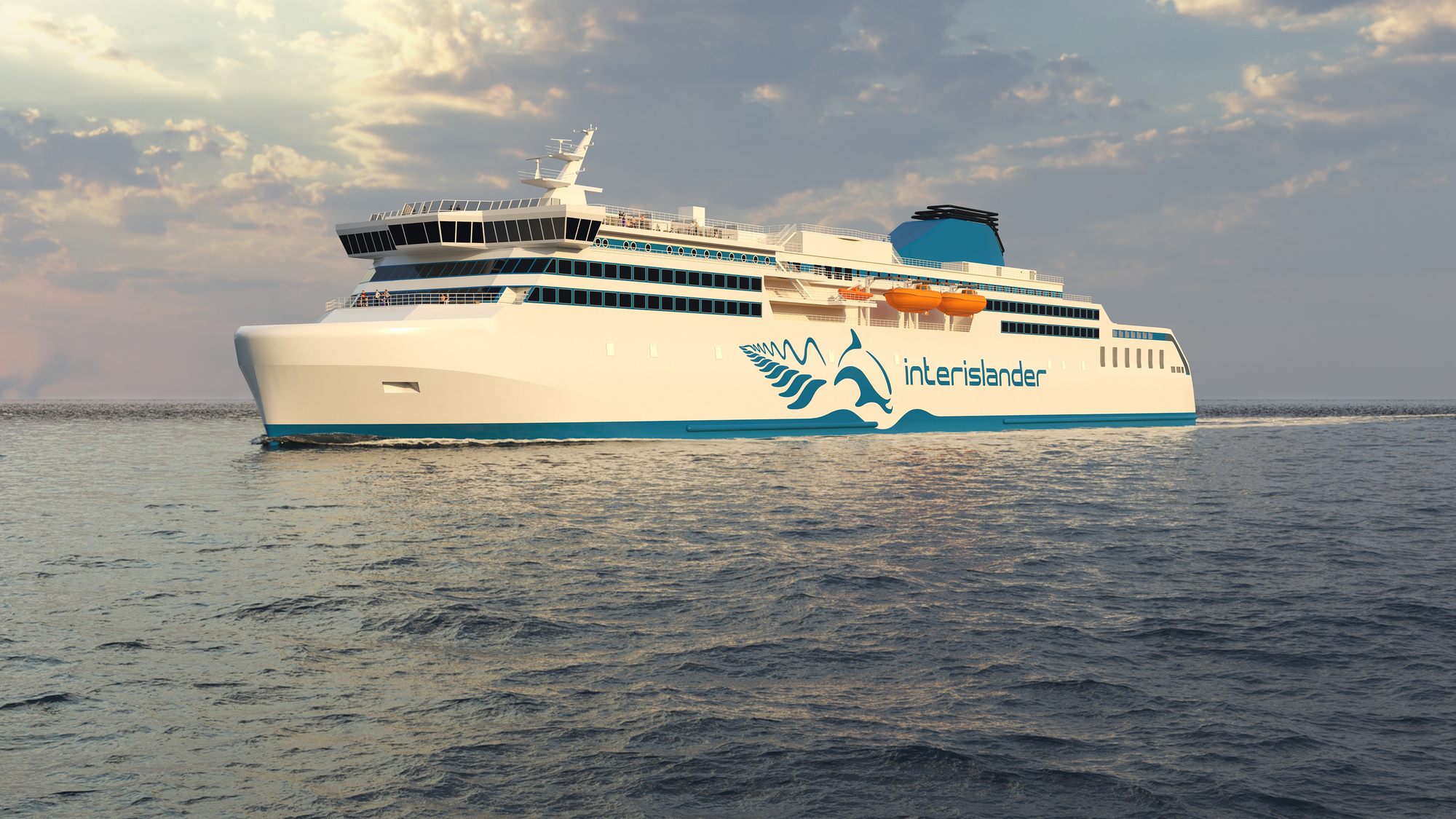
The new ships have 11 decks:
- Three of the decks will be accessible for passengers
- Three decks will be accessible for freight, rail and cars
- One deck will be crew accommodation
- The Top deck will have provisions for medical evacuations and helicopter landing
- The remaining three decks will house machinery and operational equipment.
Portside infrastructure working to maximise reuse for the new ships
The new ships will maximise the use of existing infrastructure as much as possible.
Advanced hybrid propulsion and enhanced ship control systems
- The new Cook Strait ferries use a modern type of power and propulsion system called a diesel-electric hybrid with batteries. This means they are fitted with diesel engines that can use diesel or biofuel to generate electricity for main propulsion and onboard services, but they also have electric batteries to store energy and to supplement power for the ship. These batteries have the capability to be recharged at sea or by using power from the shore, which helps save fuel and is better for the environment.
- One of the key features is that the ferries can easily switch between using diesel and batteries. This helps them use less fuel and produce fewer emissions. The batteries provide additional redundancy with a spinning reserve.
- For steering and docking, the ferries have special steering units called azimuth thrusters. These can turn in any direction, making the ships easy to control and allowing them to dock quickly and safely. The propulsion system and bow thrusters have been specified to be capable to crab the ship¹ at 1 knot in 40 knots of wind from any direction. This capability is far greater than current Interislander ferries.
- The azimuth thrusters reduce vibrations and underwater radiated noise.
- Overall, these new ferries are designed to be safer, cleaner, and more reliable for everyone travelling across Cook Strait and for the marine environment.
Delivery of a comfortable and enjoyable experience for passengers.
- The new ferries are designed to provide passengers with a safe, comfortable, and enjoyable journey, reflecting a commitment to high standards of customer experience and seamless travel.
- They are designed to minimise noise and vibration to provide passenger and crew with a comfortable living environment.
- Interior wise, the layout is highly flexible, with areas that can be closed off to save energy and reduce crew requirements depending on the demand.
- Despite the customisation, the design leverages standard equipment and smart choices to keep costs in check. The ferries will accommodate up to 1,530 passengers and 2,400 lane metres of vehicles, including full rail capability significantly improving capacity and efficiency compared to the current fleet.
Ship dimensions
200 metres long and 28 metres wide.
Capacity
- 1530 passengers and 70 crew.
- The new ferries will be integrated with the rail system, featuring efficient loading/unloading arrangements and port compatibility.
- The two new ferries will boost freight lane metres by 44%, accommodate both road and rail, and provide 63% more passenger space. Their design allows for efficient transport of mixed freight types.
New ferries designed for long-term carbon reduction and sustainable transport
The new Cook Strait ferries are built to reduce carbon emissions over their 30-year lifespan by using innovative designs, hybrid propulsion systems, and are capable to of shifting to more sustainable fuels.
New Cook Strait ferries lead the way in modern and sustainable transport with hybrid technology
- The new Cook Strait ferries are designed to be environmentally friendly, featuring hybrid propulsion and battery technology that enables significant emissions reductions.
- Their hulls and propulsion systems are optimised to minimise wake energy, protecting shorelines and sensitive marine environments. Additionally, the ferries comply with international maritime standards for emissions, ballast water management, and noise control, ensuring a sustainable and responsible operation.
- The ferries meet strict environmental standards, including international regulations for pollution control, and can be upgraded to use cleaner fuels as technology develops.
- These new vessels are expected to cut carbon emissions compared to the current fleet, leading to a significant reduction in overall emissions. They are built to operate safely in emergencies and will help New Zealand’s transport sector become more sustainable.
-
From a safety perspective, the vessels are designed to comply with the latest international safety standards, including Safe Return to Port requirements and Operational Reliability Class Notation. The design philosophy treats the ship as its own best lifeboat, with multiple layers of redundancy built into critical systems.
-
In the event of a maritime incident, the Cook Strait ferries are designed to Safe Return to Port rules and are equipped with fit-for-purpose, robust safety and operational systems designed to remain fully functional.
-
These key systems—including power and propulsion, navigation, communications, fire safety, watertight controls, and critical monitoring—ensure the vessel can continue safe operations for up to 12 hours at reduced speed, even in severe weather conditions.
-
This capability enables the ferry to reach a safe port without external assistance, prioritising the safety of passengers and crew while maintaining essential vessel integrity.
¹ “Crab the ship” refers to a manoeuvre where the vessel is intentionally angled or steered slightly sideways relative to its forward motion to compensate for external forces like wind or current. This technique is commonly used in ferry operations when:
Docking or berthing: Ferries often need to approach a wharf in strong crosswinds or tidal currents. By “crabbing,”the captain keeps the vessel’s actual track aligned with the dock while the bow points slightly into the wind or current.
Cook Strait Ferry replacement – ships timeline
The New Zealand Government established Ferry Holdings in March 2025 to procure two new rail-enabled ferries for Cook Strait.
Following an extensive procurement process Guangzhou Shipyard International Co., Ltd. (GSI) has been confirmed as the successful shipyard, with construction beginning in 2027.
Both ferries will be completed by 2029, alongside upgraded port infrastructure in Wellington and Picton, ensuring a fully integrated transport solution.